
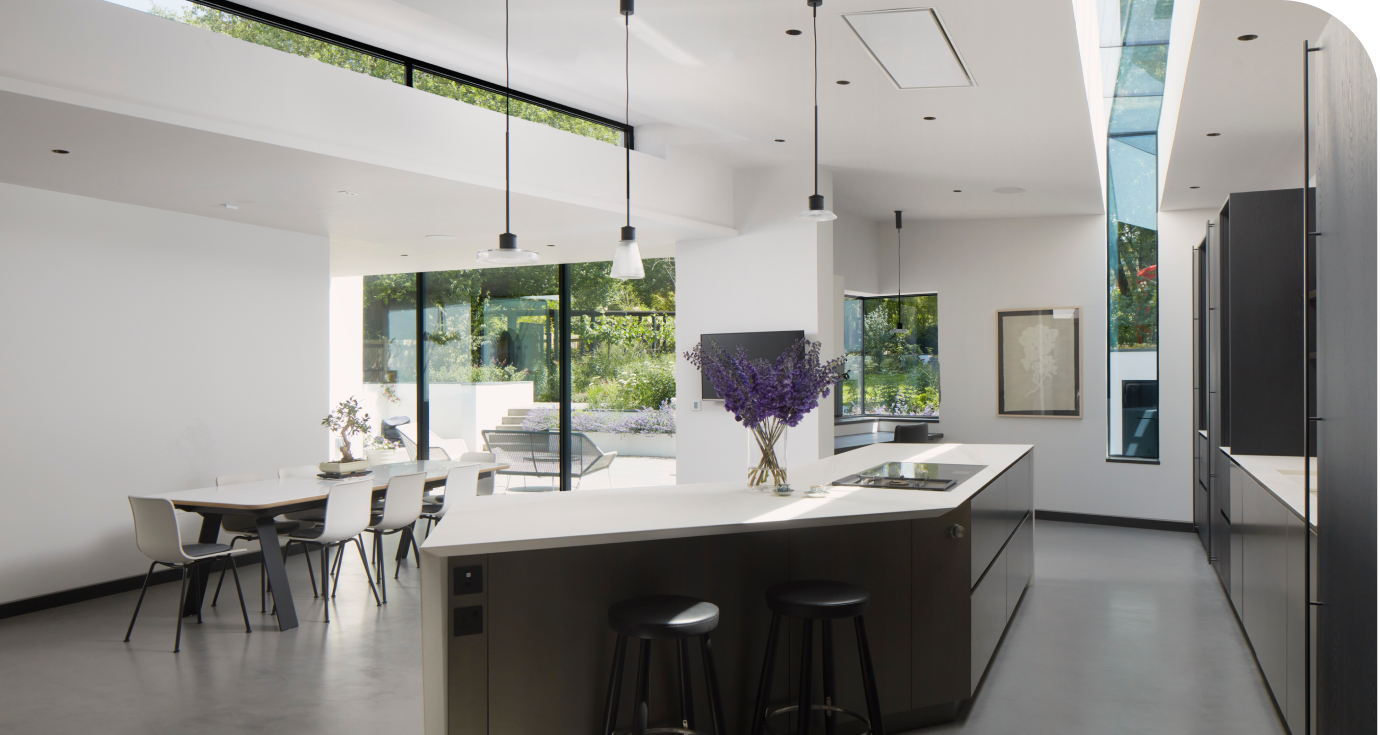

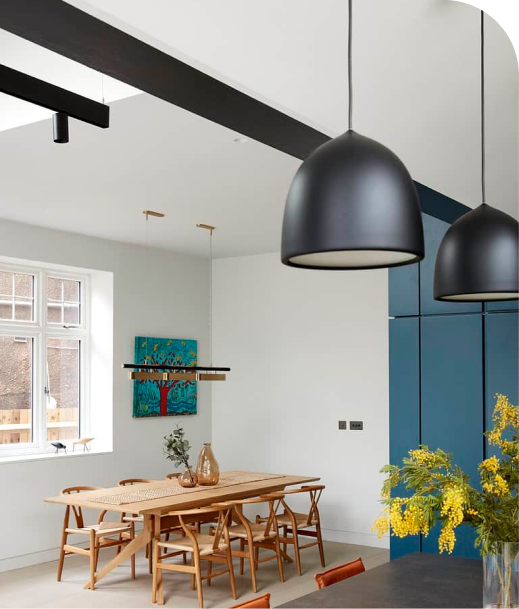
Tilted, custom skylights
Curated to maximise the ingress of light, skylights can be a major contributor to unlocking the wellbeing benefits of natural lighting within the home.
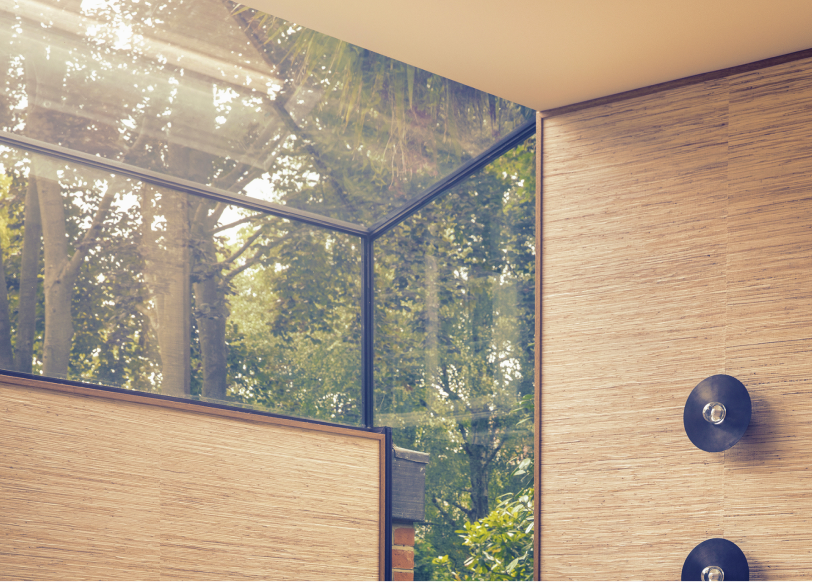
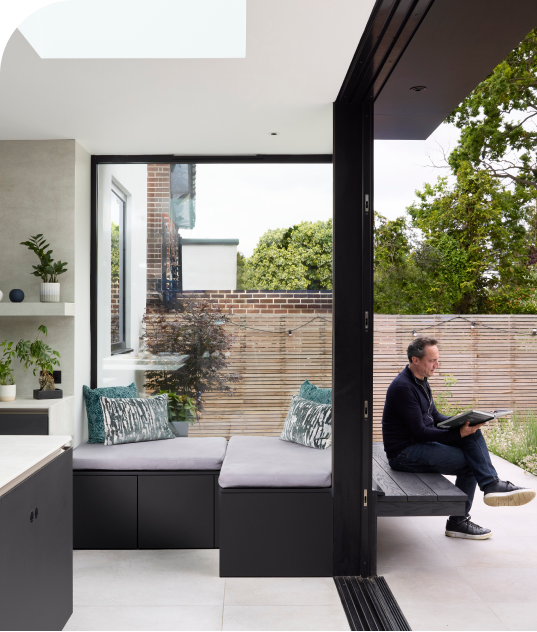
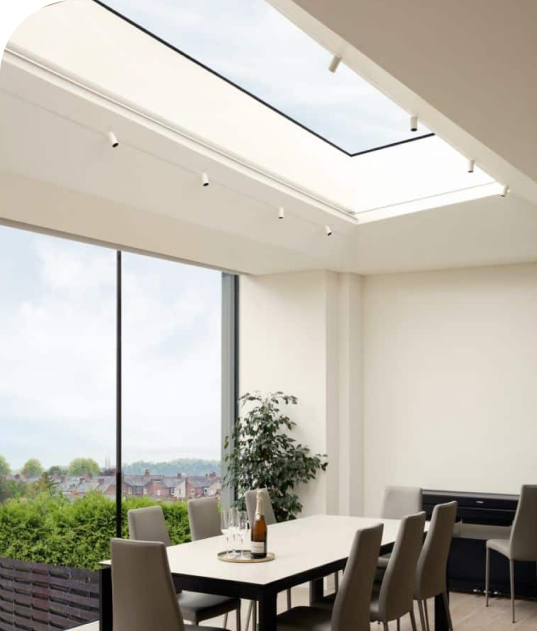
We have incorporated skylights into many of our transformation projects, including tilted skylights designed to maximise the flow of natural light within the space. We have also utilised angled skylights. Serving a dual purpose of both design and function, this specific shape successfully draws natural light directly into the centre portion of the home. This was done to counteract what would otherwise be a much darker environment, fully illuminating the entire space from the outside in.
In other projects, we have used elliptical or cone-shaped skylights to allow more light to enter and create captivating patterns throughout the space.
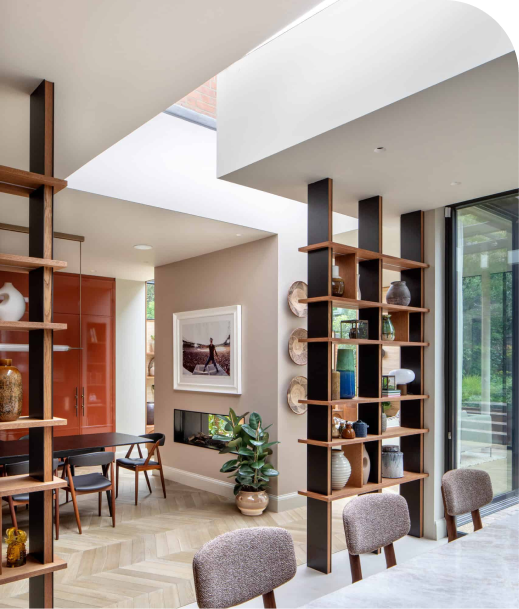
Continuous strips of glass
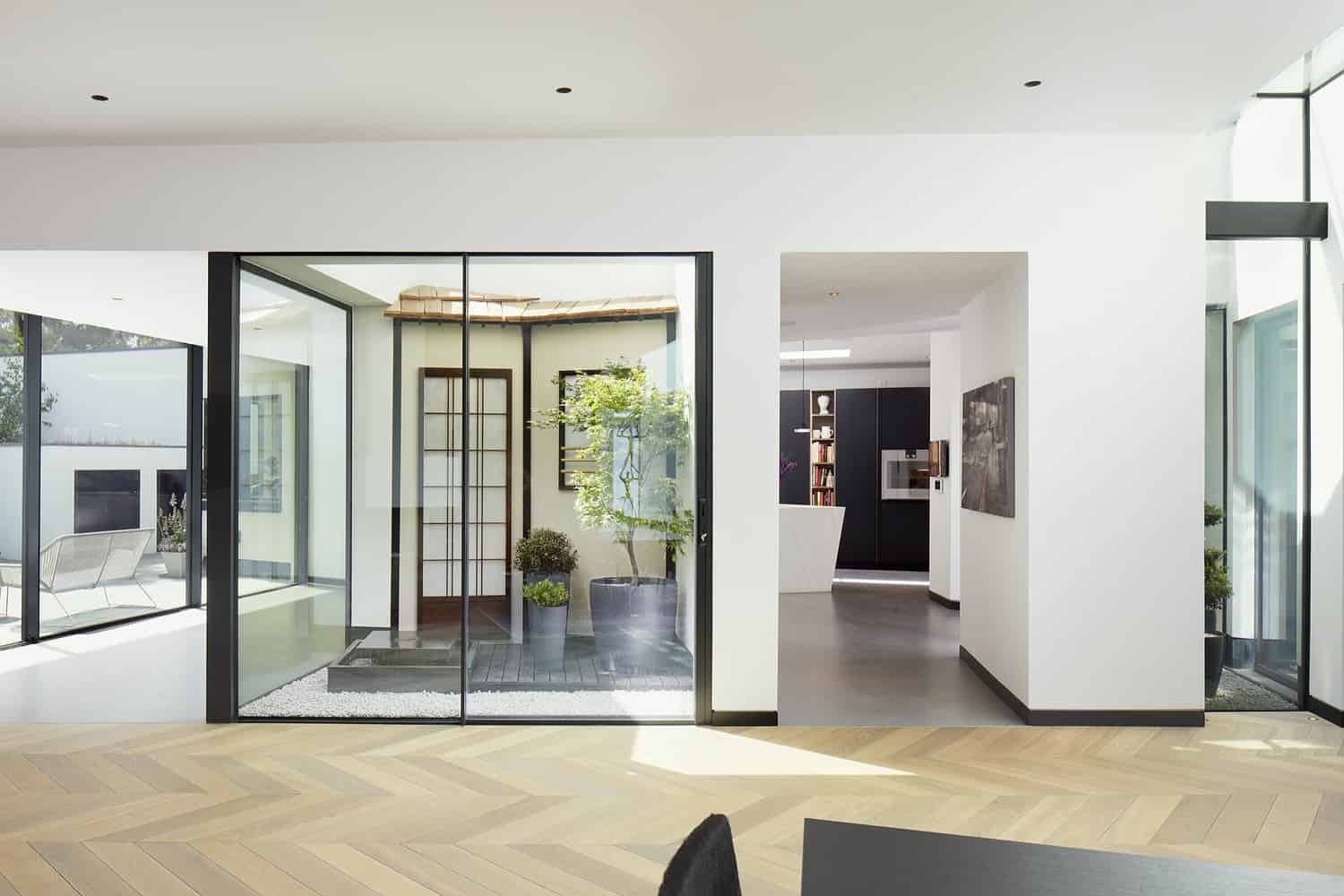
Utilising glass as a functional link between different parts of the home can instantly illuminate large areas. One of our extension-focused projects involved installing a continuous strip of glass to detach the extension from the main house.
This not only provided a convenient connection between the two, but also brought significantly more natural light to deeper spaces where it would otherwise fail to reach.
Frequently Asked Questions.
Natural light plays a fundamental role in how we experience space. Studies show that daylight can improve our circadian rhythms, enhancing our mood, overall wellbeing, and reducing stress, making it a key element in residential design.
At XUL Architecture, we design homes that maximise natural light to create interiors that feel calm, balanced and comfortable to live in.
Architects that prioritise light design spaces around how daylight enters and moves through a building. This includes positioning windows, rooflights and openings to maintain optimal levels of natural light while enhancing privacy and comfort.
At XUL Architecture, we use light as a core design tool, shaping layouts and volumes to enhance the experience of living in a home.
In neuroarchitecture, light is considered essential because it directly affects how the brain responds to space. Natural light helps regulate circadian rhythms, supports mental wellbeing and influences how spaces are perceived.
By integrating daylight into architectural design, homes can feel more uplifting, comfortable and connected to the natural environment, supporting our body’s natural rhythm.
XUL Architecture designs homes by considering light from the earliest stages of a project.
We carefully shape layouts, openings and spatial relationships to ensure that daylight reaches key living areas, creating brighter, more open and enjoyable interiors. This approach is particularly important in dense urban environments such as North London.
Yes. Many existing homes can be significantly improved through better use of natural light.
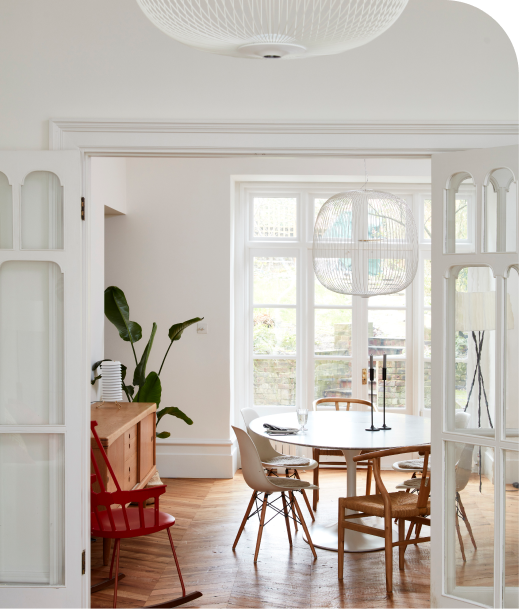
Architectural strategies such as reconfiguring layouts, adding rooflights, enlarging openings or introducing light wells can transform how a home feels and functions. Furthermore, we also consider how artificial light can be used to compliment natural light, enhancing atmosphere, extending usability into the evening, and ensuring each space feels balanced and comfortable throughout the day.
Yes. As North London architects, we regularly design homes that maximise natural light across areas such as Belsize Park, Hampstead, Hampstead Garden Suburb, Muswell Hill and Highgate.
Many of these projects involve rethinking existing homes to create brighter, more open and better-connected living spaces.
Architectural lighting design involves both natural and artificial light. While natural light shapes the overall atmosphere of a home, artificial lighting is carefully layered to support different activities and enhance the architectural space.
At XUL Architecture, we design both daylight and lighting together to create a cohesive and comfortable living environment.
Wellbeing architects focus on how a home feels as well as how it looks. By prioritising natural light, spatial clarity and human experience, they design homes that support comfort, health and everyday living.
At XUL Architecture, this approach ensures that each project delivers not just visual quality, but a meaningful improvement in how the home is experienced.